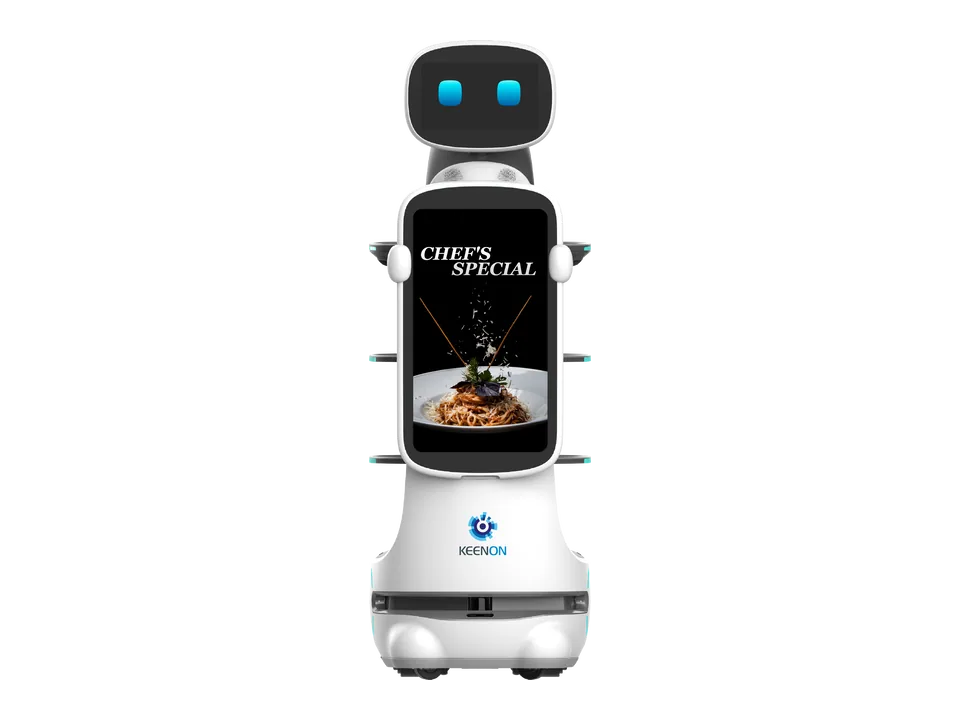
KEENON DINERBOT T10 vs OrionStar LuckiBot Pro
At a glance
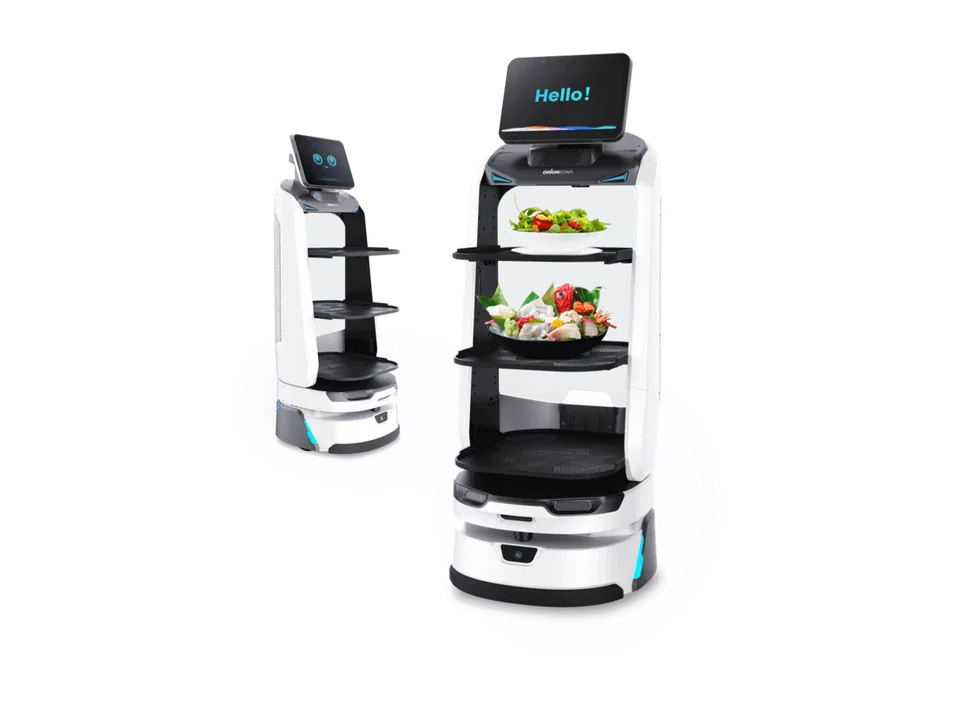
The T10 is 486 mm wide and lists 40 kg total. OrionStar lists LuckiBot Pro at 525 mm wide and up to 60 kg, with a separate three-tray loading figure in its filed manual. Measure the path past fully occupied tables and get the tray count and rating for the delivered configuration.
Published specifications
| Specification | DINERBOT T10 | LuckiBot Pro |
|---|---|---|
| Body width · Different published figures | 486 mm body width[1] | 525 mm[2] |
| Body length · Different published figures | 555 mm body depth[1] | 558 mm[2] |
| Body height · Different published figures | 1399 mm[1] | 1375 mm[2] |
| Net weight · Different published figures | 58 kg[1] | 59 kg[2] |
| Total payload | 40 kg total load capacity[1] | No figure in the cited record |
| Maximum payload | No figure in the cited record | 60 kg[2] |
| Payload per tray | No figure in the cited record | 15 kg[2] |
| Minimum passage | 590 mm minimum passage width[1] | No figure in the cited record |
| Maximum speed | Maximum 1.0 m/s[1] | No figure in the cited record |
| Maximum working slope | 5° slope angle[1] | No figure in the cited record |
| Listed runtime | 9–12.5 hours battery life[1] | No figure in the cited record |
| Typical cruising runtime | No figure in the cited record | 12 h[2] |
| Charging time | 5.5 hours from 15% to 100%, robot powered on[1] | No figure in the cited record |
| Tray length | No figure in the cited record | 500 mm[2] |
| Tray width | No figure in the cited record | 420 mm[2] |
| Screen diagonal | No figure in the cited record | 14 in[2] |
Manufacturer sources
Which model fits the site?
DINERBOT T10
Trial T10 where 486 mm body width helps at the service pass. Test the 590 mm minimum passage with occupied chairs.
LuckiBot Pro
Trial LuckiBot Pro when the kitchen regularly sends heavy batches. Put the exact number of trays and their limits on the order.
Buyer questions
How do I measure the aisle at dinner service?
From the fixed gap between the tables, subtract how far occupied chairs project into the route on each side. Include menus, bag hooks and a server waiting at the turn. Record the tightest usable width and trial it at service speed.
Can one tray take the whole rated payload?
Use the total and each shelf's limit independently. Include plates, covers and the serving tray in the weight. Request the load table for the installed shelves whenever the spec sheet only gives the total.
How should we trial drinks and soup?
Agree the fill level and container with the kitchen. Use cold equivalents first, then test the approved serving setup. Include a floor joint, the entry to a turn and a normal obstacle stop. Log spills, plate displacement and the speed used.