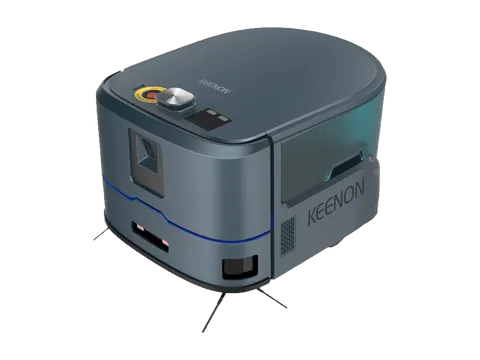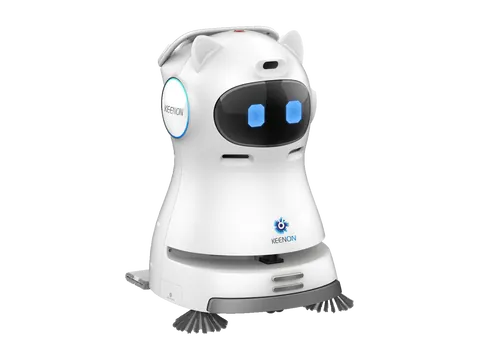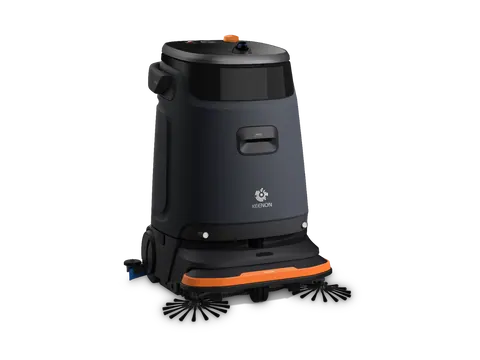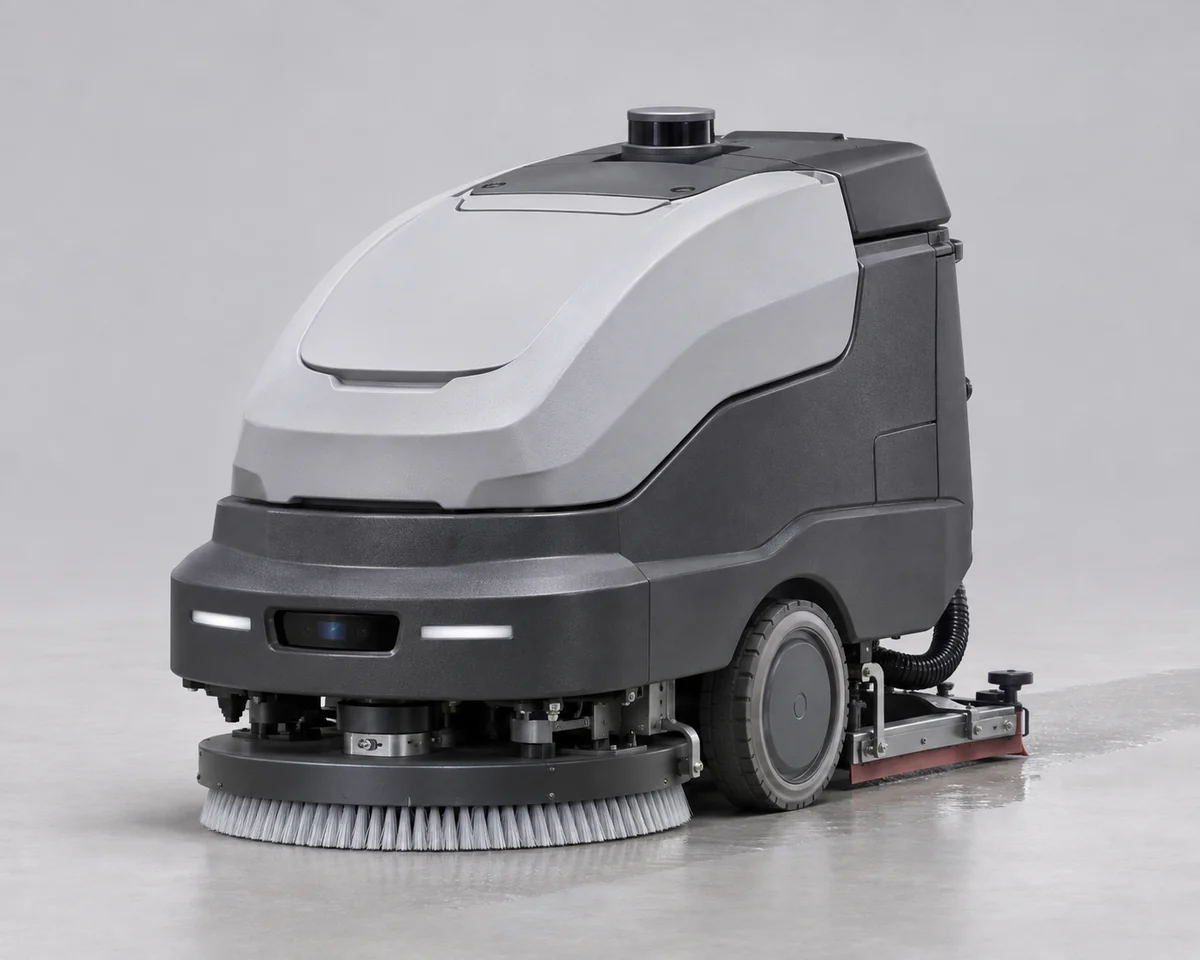
C20 scrubs a 285 mm strip with 7 L of clean water. C30 is a dry cleaner. C40 gives 400 mm of scrub width and 16 L clean water, while C55 gives 550 mm excluding its side brush and 60 L. Select by surface, fitted turning room and the time to service both tanks.
Start with the floor the robot will actually clean
Walk the route after the last guests or customers leave. Mark carpet, entrance mats, tiled vestibules, stone floors and concrete separately. Split the plan where a shift has to exchange a tool, fill water, change the cleaning method or move to another room. For a worked example, a 500 m² hotel lobby plan may contain desk space, carpet and fixed furniture. Deduct all those areas when estimating the wet route and write a separate carpet job. Ask the supplier whether the offered dry attachment is appropriate for the pile and test hair and grit around the mat edge.
A supermarket has its own choke points. Draw the freezer doors open, the promotional stacks in place and a rolling cage where staff restock. A warehouse plan often looks clear until inbound pallets are staged across the aisle end. Before specifying an automatic route, have the operations lead choose when it can be cleared and which shift owns a blocked section. Bring a wet floor inspection into the trial. Sticky patches near produce or tyre marks on a warehouse floor may need a second pass at a different flow.
Published C20, C30, C40 and C55 data
| Model | Scrub width | Fresh / recovery | Battery time by mode | Manufacturer sources |
|---|---|---|---|---|
| KLEENBOT C20 | 285 mm | 7 L / 5 L | 4 h | product data |
| KLEENBOT C30 | — | — | ≤6 h (sweeping and vacuuming) · ≤10 h (dust mopping) | product data |
| KLEENBOT C40 | 400 mm | 16 L / 11 L | ≤5 h (wet) · ≤12 h (sweeping) | product data |
| KLEENBOT C55 | 550 mm | 60 L / 47 L | ≤5 h | product data |
The C30 headline cleaning width is up to 610 mm. Its 490 mm body width is published without the dust mop. Get the fitted outline in the mode you plan to use. The C40 lists a 650 mm minimum passage and a 616 mm width with the squeegee. The C55 lists 850 mm with the squeegee. A fitted body width and a minimum passage answer different questions. Ask the supplier for the space it actually needs when turning at an aisle end with the proposed attachment.
The C55 theoretical maximum is 2,376 m²/h. KEENON publishes up to 1,100 m²/h for C40. Check the method for the cited rate before comparing them. For a quote, request the measured accepted area over a timed shift, with the zone definition, brush and water settings appended. KEENON KLEENBOT C55 data, KEENON KLEENBOT C40 data
Boutique hotel with a carpet corridor and hard lobby floor
Take the C20 into small hard-floor areas with thresholds and furniture legs. Its 285 mm scrub band is useful when few long paths remain. Count passes over the floor area that is actually reachable and check where the operator empties the 5 L recovery tank. A narrow machine can take longer if it has to do repeated laps of a wide breakfast area. Put each small room in the plan separately and watch whether the robot makes it through housekeeping’s working door position.
For a C30 trial, test sweeping with vacuuming and dust mopping as separate jobs. KEENON publishes up to 6 h for the combined sweep and vacuum mode and up to 10 h for dust mopping. Make a dust check after passing the carpet edge and note the brush and filter condition. Include the removal of hair or thread and the time to empty the debris. Give the dry machine a storage and service spot that staff can use without carrying dirt through a guest waiting area. KEENON KLEENBOT C30 data
Supermarket and warehouse routes
Treat 5,000 m² as an example of gross floor area. Draw actual aisles first and mark the window when they are available. C40’s 400 mm wet band and 16/11 L tanks call for a water-stop plan on long routes. Ask the operator to complete a set of connected aisles and record the first point at which the recovery tank needs attention. Compare that run with the C40 versus Phantas figures before arranging a second trial in the same store.
For C55, measure the end turn with the attached squeegee and with the largest object routinely left there. A wider scrub band cuts pass count on wide clear lanes. If the warehouse allocates long straight runs, check the reach to the water point and the time needed to exchange the battery. Nominal battery life and water capacity have independent limits. Follow the approved battery procedure and write down who carries out the exchange on the night shift.
Convert usable tank litres into working minutes
Measure the water against a known area and the declared flow setting. For an illustrative calculation, if a C40 meters 2 L of clean water per 100 m² and recovers 1.6 L over that area, the listed 16 L of clean water corresponds to 800 m² before allowances. The 11 L recovery volume corresponds to roughly 688 m². An operational reserve reduces both. Decide where that calculation puts the next stop and make sure the robot will be near its approved service point. Measure the same rates on your C55 trial because brush, overlap and floor can change the result.
Time the stop from the last cleaned strip until the next strip starts. Log the interruptions for rinsing, late store access and a labour call when the machine cannot redock. If a wet shift has several routes, count the area that has passed inspection by the agreed handover time. Keep this measure beside the published cleaning rate so purchasing can see why a larger tank helps some sites and barely changes others.
Price the fitted system and the time to support it
Ask for the exact brush, pad holder, squeegee, filtration and charging or service station for the floor conditions you have documented. Request the station’s water and drain drawing where a plumbed setup is offered. Record drain height and socket location and have facilities agree to the civil and electrical works before the supplier arrives. Get the local lead times for squeegee lips, brushes and filters and identify the people who have authority to return the robot to service after a station fault.
Keep the trial conditions in the order
Ask the supplier to identify the brush, water mode and software build used in the trial report. Mark two trouble spots on the route plan and require the installer to repeat those passes with the machine that arrives. Include a check after a worn squeegee is replaced, since a fresh lip can change the adjustment and how well the floor dries. Set aside time during the first week for operators to repeat both the start and shutdown sequence.
For sites with more than one cleaning team, record when the machine changes custody. The team cleaning the front of a supermarket may finish before the loading bay is available. Set a handover point and agree what charge and water state the next operator should find. For a warehouse, also write down which parts of the route become manual when the aisles are returned to forklift traffic. These details let both teams recognize an incomplete shift from the same report.
Put the floor plan, fitted clearances, water service times and accepted square metres on the quote request. Compare the C40 and C55 side by side, then check the KEENON lineup and scrubber category against the same route.
Buyer questions
Can I use the C30 on a site with both tile and carpet?
Assess the dry mode and the offered attachment on each surface. If the tiles require wet scrubbing, allocate a separate wet route and compare an appropriate machine on it.
Does the 60 L C55 clean-water tank determine shift output?
Measure the draw and return rates and stop at whichever usable tank limit comes first. Include travel to the drain, rinsing, restarting and any battery exchange before estimating completed area.
What should a distributor quote with the machine?
Ask for the precise accessories, station and installation scope, the recommended consumables and local lead times. Attach the floor type, clearance survey and required trial outcomes.
 KEENON Robotics